Why AV and UC Standardisation Programmes Fail at Scale
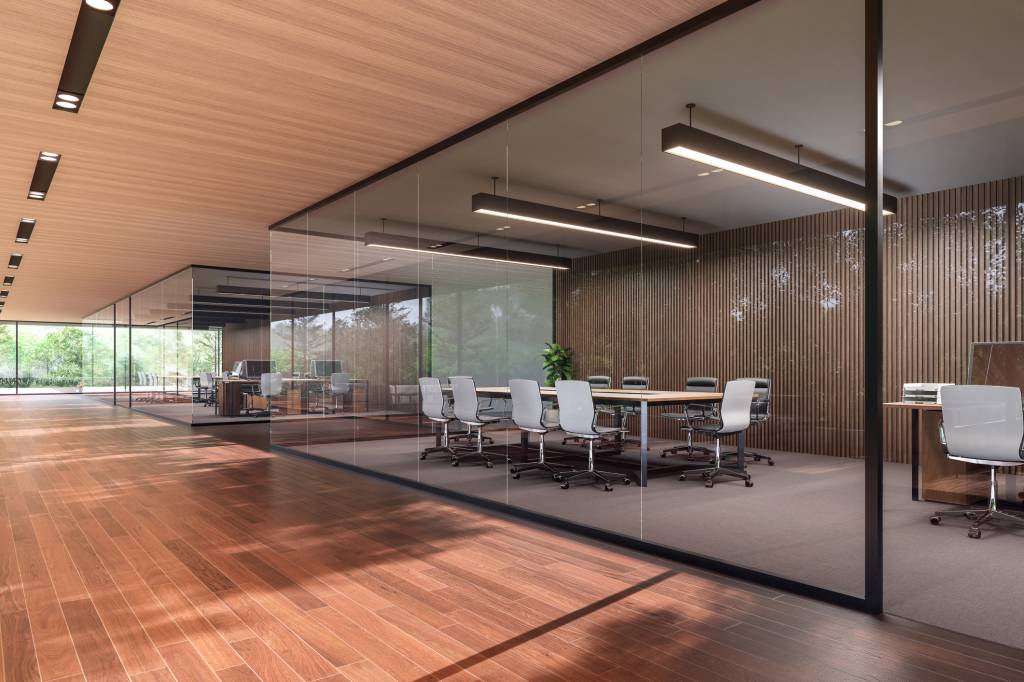
There is a quiet frustration that exists in almost every large organisation when it comes to meeting rooms. On paper, everything looks right. Significant investment has been made. Standards have been defined. Approved technologies have been selected and deployed at scale. And yet, despite all of this, the day-to-day experience for users remains inconsistent, unpredictable, and often disappointing.
This disconnect is not accidental. It is the natural outcome of how most AV and UC standardisation programmes are designed.
At the outset, organisations tend to approach standardisation as a finite project. They define a set of room types, align on hardware, and roll out what appears to be a consistent environment. For a brief period, this works. Rooms behave as expected, support calls are low, and confidence is high. But estates are not static. Offices evolve, teams change, technologies update, and local decisions inevitably begin to creep in. Over time, what was once standardised begins to fragment.
This is the point where many programmes start to unravel not because the original strategy was flawed, but because it assumed that standardisation is something you achieve, rather than something you continuously operate.

A common misconception sits at the heart of this issue: the belief that hardware standardisation is enough. It is an understandable assumption. If every room contains the same equipment, surely the experience will be consistent. In reality, hardware is only one part of a much more complex system. Installation variances, firmware differences, environmental factors, and user behaviour all introduce subtle inconsistencies that compound over time. Two rooms may look identical on a specification sheet, yet behave completely differently in practice.
This is what many organisations come to recognise as the “room lottery”. Users walk into a meeting space with no real confidence in what will happen next. Will the call start first time? Will the audio work properly? Will the interface behave as expected? That uncertainty creates friction, and friction changes behaviour. People begin to avoid certain rooms, rely on workarounds, or disengage from the technology altogether. At that point, the organisation has not just lost standardisation it has lost trust.
The underlying issue is not technological. It is operational.
Standardisation at scale is not about what you deploy; it is about how you govern, maintain, and evolve what has been deployed. The most successful organisations recognise this and shift their focus accordingly. Rather than treating standardisation as a one-off initiative, they embed it within an ongoing operating model. They define ownership, establish clear governance, and implement mechanisms to monitor, measure, and correct deviations over time. In doing so, they align closely with broader strategic planning principles where continuous control and optimisation are essential to long-term success .
One of the more significant shifts we are seeing in mature environments is a move away from standardising rooms based purely on hardware, towards standardising them based on behaviour. This is a subtle but powerful change. Instead of asking whether every room contains the same components, organisations ask whether every room delivers the same experience. Does every space allow users to join meetings in the same way? Does it handle content sharing consistently? Does it respond predictably, regardless of location?
By focusing on behaviour, organisations create a layer of consistency that is resilient to the inevitable changes in underlying technology. Hardware can evolve, vendors can change, and rooms can be adapted but the user experience remains stable.
Achieving this requires a different kind of operating model. One that prioritises visibility, control, and simplicity at scale. The ambition is not just to manage a large estate, but to make that estate feel manageable. In practical terms, this means centralised oversight, standardised processes, and a proactive approach to maintenance and optimisation. The goal is deceptively simple: to operate hundreds of rooms with the same confidence and consistency as a much smaller estate.
For channel partners, this represents a meaningful shift in where value is created. The traditional model, centred on design and deployment, is no longer sufficient on its own. Customers are increasingly looking for partners who can help them sustain performance over time, not just achieve it at the point of installation. This requires a deeper engagement with governance, operational design, and long-term optimisation.
Those who make this transition move beyond being suppliers of technology and become enablers of outcomes. They play a role not just in what is installed, but in how effectively it continues to serve the organisation months and years later. And in doing so, they position themselves at the centre of a much more strategic conversation.
Ultimately, AV and UC standardisation does not fail because organisations choose the wrong tools. It fails because they underestimate the complexity of maintaining consistency at scale. The real challenge is not deployment it is endurance. And for those willing to address that challenge properly, there is a clear opportunity to differentiate.
If you’re exploring how to help your customers solve these challenges at scale, we are always open to sharing perspectives on what’s working across the market.





Want to stay in the loop?
Keep up-to-date with everything DisplayNote – including new releases, job openings, and customer giveaways.
You are currently unable to join our mailing list - if you would like to get in touch please check out our contact page.
Don’t worry, we’ll not spam you and we’ll never share your email with anyone